How much does a car battery replacement cost in Melbourne? There is no single price that suits every vehicle. The final cost depends on the battery specification, the vehicle’s electrical requirements, whether battery registration or memory-saving procedures are needed, and whether testing or mobile fitting is included. The most reliable way to compare quotes is to compare the same specification and inclusions—not just the number on the quote.
This guide explains the main cost factors, how to avoid paying for the wrong battery, and what to ask a mobile battery service before booking. Prices can change with vehicle type, battery availability and service requirements, so treat any quote as vehicle-specific and confirm the current total before authorising work.

Quick answer: what determines the replacement price?
Battery replacement is a combination of the correct battery and the work needed to install it safely. A small conventional battery for an older vehicle can have very different requirements from an AGM battery in a modern vehicle with stop-start technology. Some vehicles also require battery management system registration after installation.
| Cost factor | Why it matters | What to confirm |
|---|---|---|
| Battery technology | Standard flooded, EFB and AGM batteries are designed for different electrical demands. | Ask for the exact battery type and specification. |
| Vehicle make and model | Physical size, terminal layout, capacity and starting requirements vary. | Provide make, model, year and engine variant. |
| Stop-start or energy management | Some vehicles require a specific battery technology and a registration/reset procedure. | Ask whether coding or battery registration is required and included. |
| Installation access | A battery located under trim, in the boot or in a difficult-to-reach area may take longer to replace. | Confirm any extra labour or access charges. |
| Mobile call-out | On-site convenience may be included or itemised separately. | Ask for the total including travel, fitting and testing. |
| Warranty and support | Coverage conditions and the process for a later fault can differ. | Request warranty length, exclusions and claim process in writing. |
Battery types: why the cheapest option may not fit
Battery technology is not interchangeable in every vehicle. A replacement should meet the manufacturer’s requirements for chemistry, dimensions, terminal arrangement and electrical performance. Installing a lower-specification battery simply because it costs less can lead to poor durability or compatibility issues.
| Battery type | Common use | What to know before buying |
|---|---|---|
| Conventional flooded lead-acid | Many vehicles with standard electrical demands. | Confirm the correct size, capacity, starting rating and terminal layout. |
| EFB (Enhanced Flooded Battery) | Some vehicles with stop-start systems and higher cycling demands. | Use the specified technology; do not downgrade without checking the manufacturer’s guidance. |
| AGM (Absorbent Glass Mat) | Many vehicles with advanced stop-start or substantial electrical loads. | Often has specific charging and battery-management requirements. |
| Auxiliary 12V battery | Some hybrids and vehicles with separate auxiliary systems. | Confirm whether the vehicle has a main starting battery, an auxiliary battery, or both. |
Important: the vehicle manual and battery catalogue should guide selection. A battery that physically fits is not automatically the correct battery. If you are unsure which specification your car needs, arrange a check before purchasing.
What should a good replacement quote include?
Ask for an itemised quote so you can compare providers fairly. A low headline price may not include installation, testing, travel or vehicle-specific electronic procedures. Equally, a higher quote is not automatically better: the important point is whether the battery specification and included work match your vehicle.
| Quote item | Question to ask | Why it matters |
|---|---|---|
| Battery make and model | Which exact battery will be installed? | Lets you compare like-for-like products and specifications. |
| Supply and fitting | Is installation included in the quoted total? | Prevents an unexpected labour charge. |
| Call-out or travel | Is there a separate mobile service fee for my location? | Helps establish the actual on-site cost. |
| Testing and diagnosis | Will the old battery and charging system be checked? | Reduces the chance of replacing a battery when another fault is responsible. |
| Registration or reset | Does my vehicle need battery registration, coding or a reset? | Some modern vehicles monitor battery age and type electronically. |
| Warranty | What is covered, for how long, and where do I go if there is a problem? | Clarifies support after installation. |
| Old battery handling | Is the old battery taken away for appropriate recycling? | Lead-acid batteries should be handled and recycled responsibly. |
Should you replace the battery or test it first?
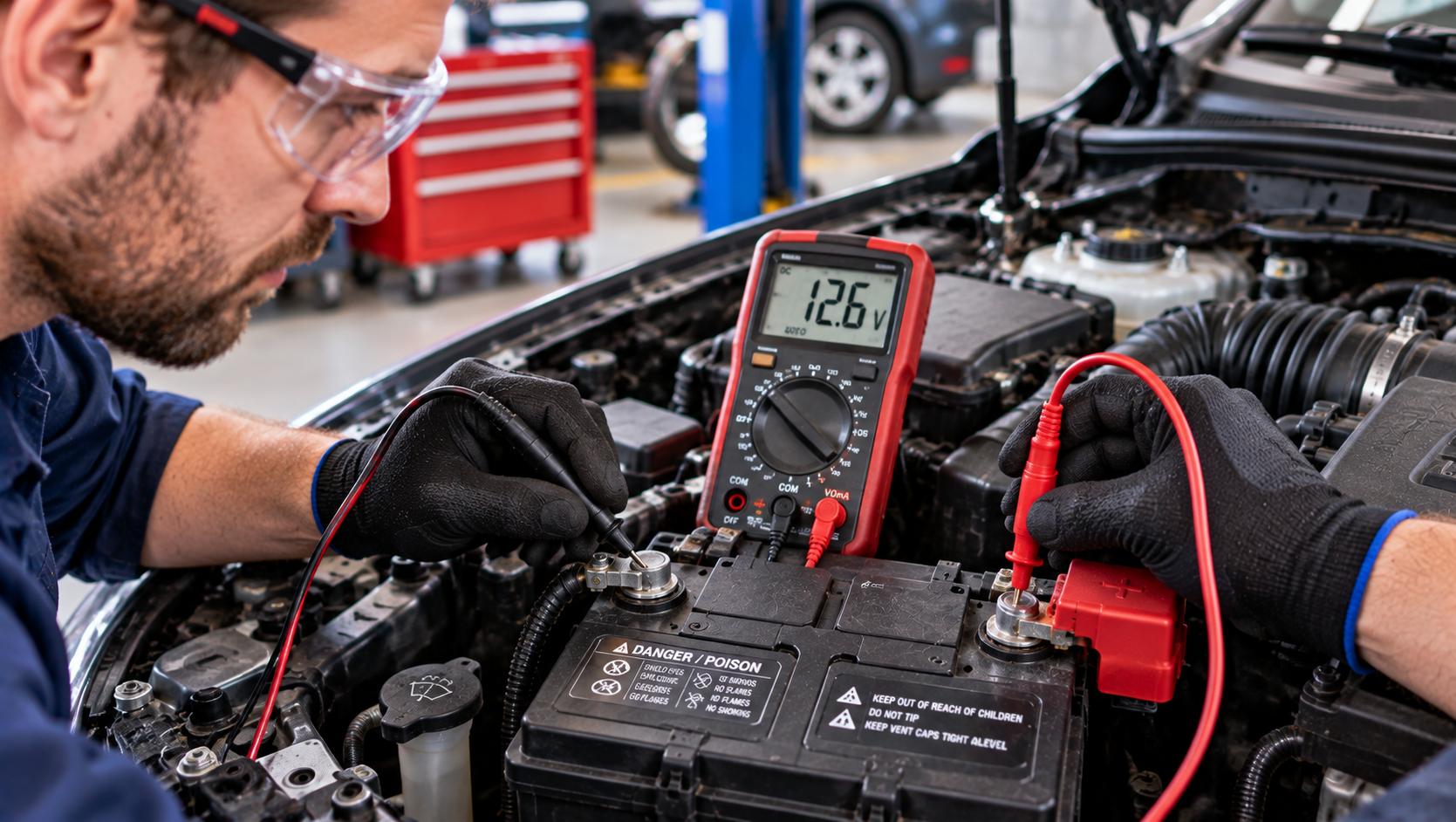
A flat battery does not always mean the battery has reached the end of its life. Leaving lights on, making repeated short trips, a charging-system fault or an electrical drain can also leave a battery discharged. Testing helps distinguish a weak battery from a problem elsewhere.
| Symptom | Possible explanation | Useful next step |
|---|---|---|
| Slow engine cranking | Low charge, ageing battery, poor connection or starting-system issue. | Battery and connection testing. |
| Battery repeatedly flat overnight | Battery deterioration, parasitic drain or charging issue. | Battery test plus electrical drain diagnosis if needed. |
| Battery warning light stays on | Possible charging-system fault. | Arrange charging-system diagnosis rather than fitting a battery blindly. |
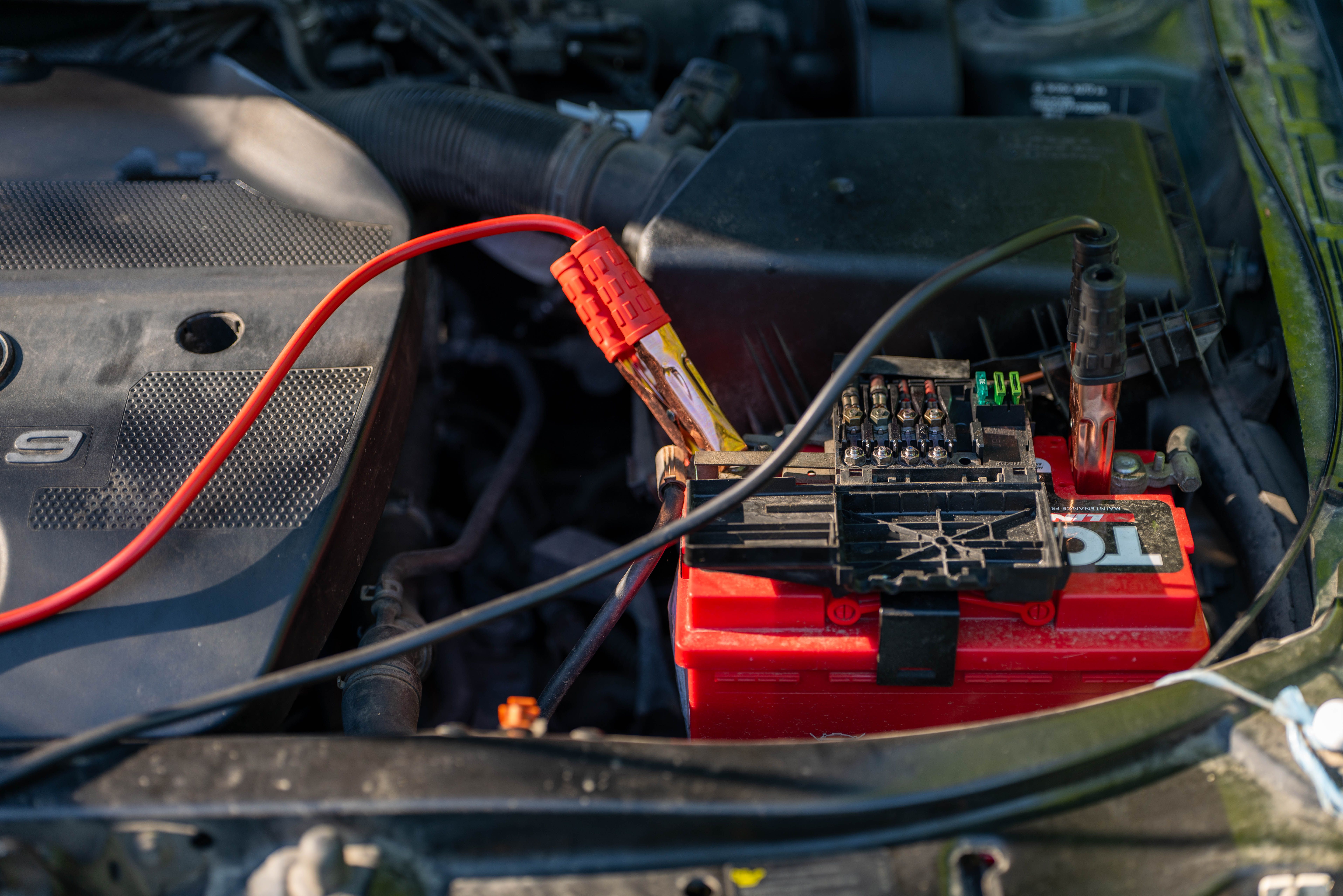
| Car starts after a jump but later fails again | Battery may not hold charge, or the vehicle may not be charging correctly. | Test the battery and charging system. |
| Battery case is swollen, leaking or damaged | Potentially unsafe battery condition. | Do not jump-start or handle unnecessarily; arrange qualified assistance. |
You can learn more about the battery testing service before deciding whether replacement is necessary. If testing indicates the battery has failed, review the car battery replacement service.
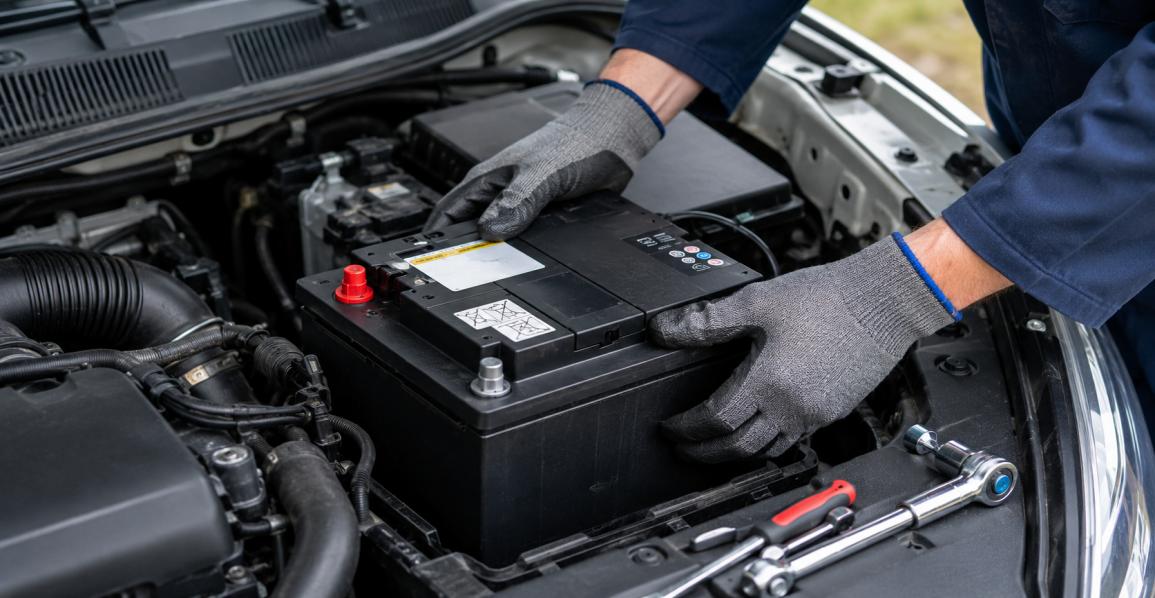
Mobile battery replacement vs visiting a workshop
A mobile service can be convenient when the vehicle will not start or getting to a workshop is difficult. A workshop may be preferable where a broader mechanical inspection, complex diagnosis or specialised repair is needed. The best option depends on the fault, vehicle and work required—not simply the distance to the nearest provider.
| Consideration | Mobile battery service | Workshop |
|---|---|---|
| Convenience | Can attend an agreed location, subject to coverage and availability. | You generally need to get the vehicle to the premises. |
| Battery replacement | Suitable when the service has the correct battery and tools for the vehicle. | Can replace the battery and may offer broader workshop facilities. |
| Complex diagnosis | Basic testing may identify whether further diagnosis is needed. | May be better equipped for extended electrical or mechanical investigation. |
| Price comparison | Check battery, call-out, fitting and testing inclusions. | Check battery, labour, diagnostic fees and any additional charges. |
| Best next step | Describe the symptoms and confirm vehicle compatibility before booking. | Ask whether the workshop can diagnose the underlying issue as well as replace the battery. |
How to get an accurate quote faster
Have the following details ready when contacting a provider. Clear information helps the service confirm battery compatibility and whether an on-site visit is suitable.
Vehicle make, model, year and engine or variant, if known.
Whether the vehicle has stop-start technology, hybrid components or a separate auxiliary battery.
A photo of the existing battery label, if it is safe and practical to take one.
Your suburb or location and whether the vehicle is parked in a driveway, car park or roadside location.
The symptoms: slow crank, clicking, no lights, battery warning light, or repeated flat battery.
Whether the car has already been jump-started or recently had electrical work.
Common mistakes to avoid when comparing prices
Choosing by price alone: confirm battery technology and specifications match the vehicle.
Assuming every flat battery needs replacement: test first if the cause is unclear.
Ignoring the charging system: a faulty alternator or electrical drain can flatten a new battery.
Forgetting vehicle-specific procedures: some models need battery registration or a reset.
Not checking warranty conditions: understand the claim process and what proof is required.
Accepting a vague quote: ask for the total and what is included before work begins.
Car battery replacement in Melbourne West
Car Battery Service can discuss battery testing, replacement and jump-start assistance based on your vehicle, location and current availability. If you do not know whether the battery is the cause, start with battery testing. If a replacement is appropriate, review battery replacement and confirm the correct battery specification before booking. You can also check service areas and request a service.
If you need help identifying the cause, contact Car Battery Service to discuss your vehicle, location and symptoms. Call +61 467 037 886 or email mechanicnearyoubatteries@gmail.com. You can also request a service; availability and suitability depend on your vehicle and location.
Frequently asked questions
How much does car battery replacement cost in Melbourne?
The cost varies with battery technology, vehicle specification, fitting, call-out arrangements and any required battery registration. Ask for a vehicle-specific quote that lists the exact battery and all included charges.
Is installation included in a car battery quote?
Not always. Confirm whether the quote includes the battery, labour, mobile call-out, testing, disposal of the old battery and any vehicle-specific electronic procedure.
Can I install a cheaper battery than the one currently fitted?
Do not downgrade battery technology or specification without checking the vehicle manufacturer’s requirements. Some stop-start and modern vehicles need EFB or AGM technology and may require battery registration.
Should I test my battery before replacing it?
Testing is useful when the cause of the flat battery is unclear. It can help identify whether the battery is weak or whether a charging fault, poor connection or electrical drain may also need attention.
Does a new battery fix an alternator problem?
No. A new battery does not repair a faulty charging system. If the alternator is not charging correctly, the replacement battery may also become discharged. Ask for appropriate testing when warning lights or repeat failures occur.
Can a mobile service replace my battery at home?
That depends on your location, vehicle, battery availability and the service provider’s current coverage. Share your vehicle details and symptoms when enquiring so suitability can be confirmed.
What details do I need for a quote?
Provide the make, model, year, engine or variant if known, your location, the symptoms and—if safe—a photo of the battery label. Mention stop-start or hybrid systems and any previous jump-starts.
What happens to the old car battery?
Lead-acid batteries should be handled and recycled through appropriate channels. Ask whether old-battery collection or recycling is included in the service.
Final checklist before booking
Compare the exact battery specification, installation, call-out fee, testing, vehicle-specific procedures and warranty—not just the advertised starting price. If the battery keeps going flat or warning lights remain on, request diagnosis of the underlying cause as well. A clear quote and correct battery choice help avoid repeat visits and unnecessary expense.
Pricing and service availability depend on the vehicle, battery specification, location and current conditions. Confirm the total quote and inclusions with the service provider before authorising work.