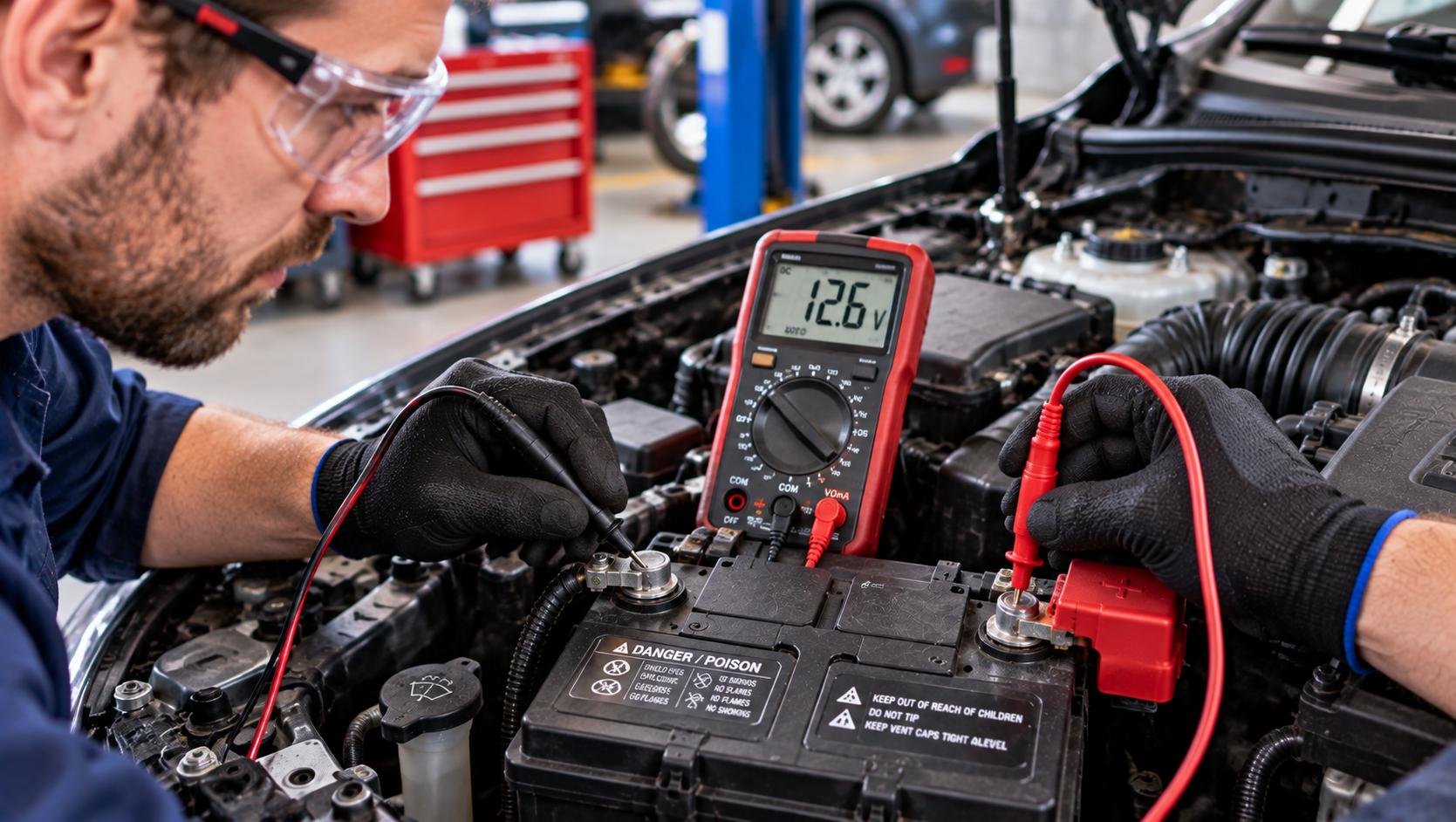
A car battery often gives warning signs before it can no longer start the engine, although some failures happen suddenly. Slow cranking, repeated flat-battery incidents and electrical symptoms are reasons to get the battery checked—not proof on their own that it must be replaced. Testing helps separate battery wear from charging, connection or other vehicle faults.
Quick guide: symptoms and next steps
The 9 warning signs to watch for
Warning sign
What it may indicate
Recommended action
1. Slow engine cranking
Low charge, ageing battery or poor connection
Arrange a battery test
2. Rapid clicking when starting
Low voltage or poor battery connection
Test battery and terminals
3. Repeated flat battery
Battery deterioration, parasitic drain or charging fault
Test battery and charging system
4. Needing frequent jump-starts
Battery may not hold charge or another fault exists
Diagnose instead of relying on boosts
5. Lights dim during cranking
Voltage dropping under starter load
Check battery and connections
6. Battery/charging warning light
Possible charging-system issue
Follow vehicle guidance and arrange prompt checks
7. Electrical accessories behave inconsistently
Low voltage or an electrical issue
Have the system tested
8. Battery is several years old
Age-related capacity loss is possible
Test condition; do not rely on age alone
9. Swollen, cracked or leaking battery
Potentially hazardous battery damage
Do not touch or jump-start; seek professional help
1. Slow engine cranking
If the engine turns more slowly than usual, the battery may be low on charge or losing capacity. Poor terminals, starter problems and other faults can cause similar symptoms, so a test is important.
2. Clicking or repeated starting problems
Rapid clicking can occur when voltage is too low to operate the starter. One click can also involve the starter circuit. Avoid repeated long attempts and get the battery and connections checked.
3. The battery keeps going flat
A battery that repeatedly loses charge may be worn, but the cause could also be an electrical drain, short-trip use or a charging-system problem. Replacing the battery without finding the cause may not prevent a repeat.
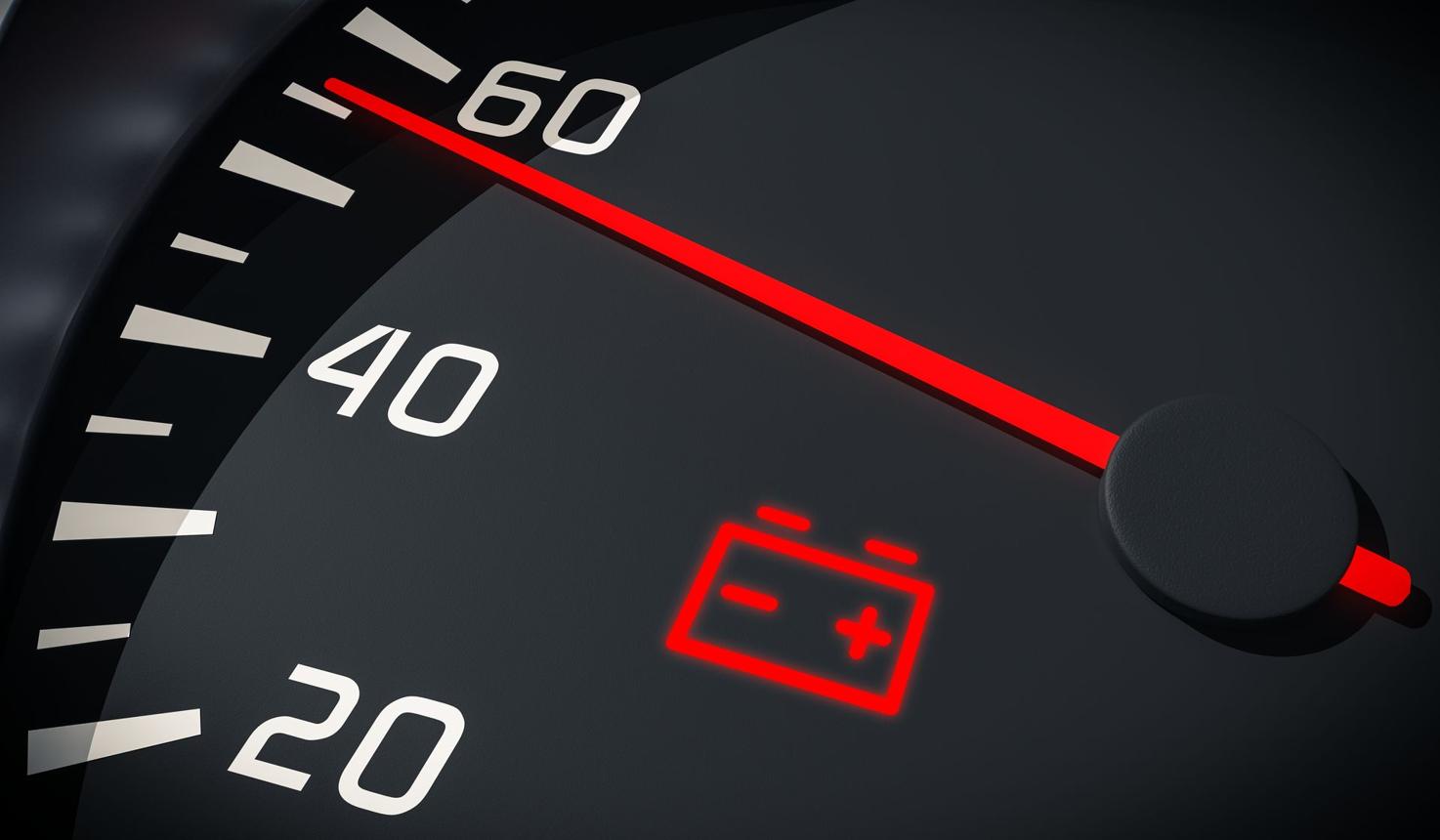
4. A battery or charging warning light appears
A dashboard battery symbol can indicate a charging-system problem rather than simply a battery that needs replacing. Follow the vehicle manual and seek prompt assistance, especially if electrical systems behave abnormally.
5. Physical damage or unusual battery condition
Cracks, leaks, swelling or unusual heat are not normal signs to ignore. Do not touch leaking material or attempt a jump-start. Keep clear and contact a qualified professional.
Battery problem or something else?
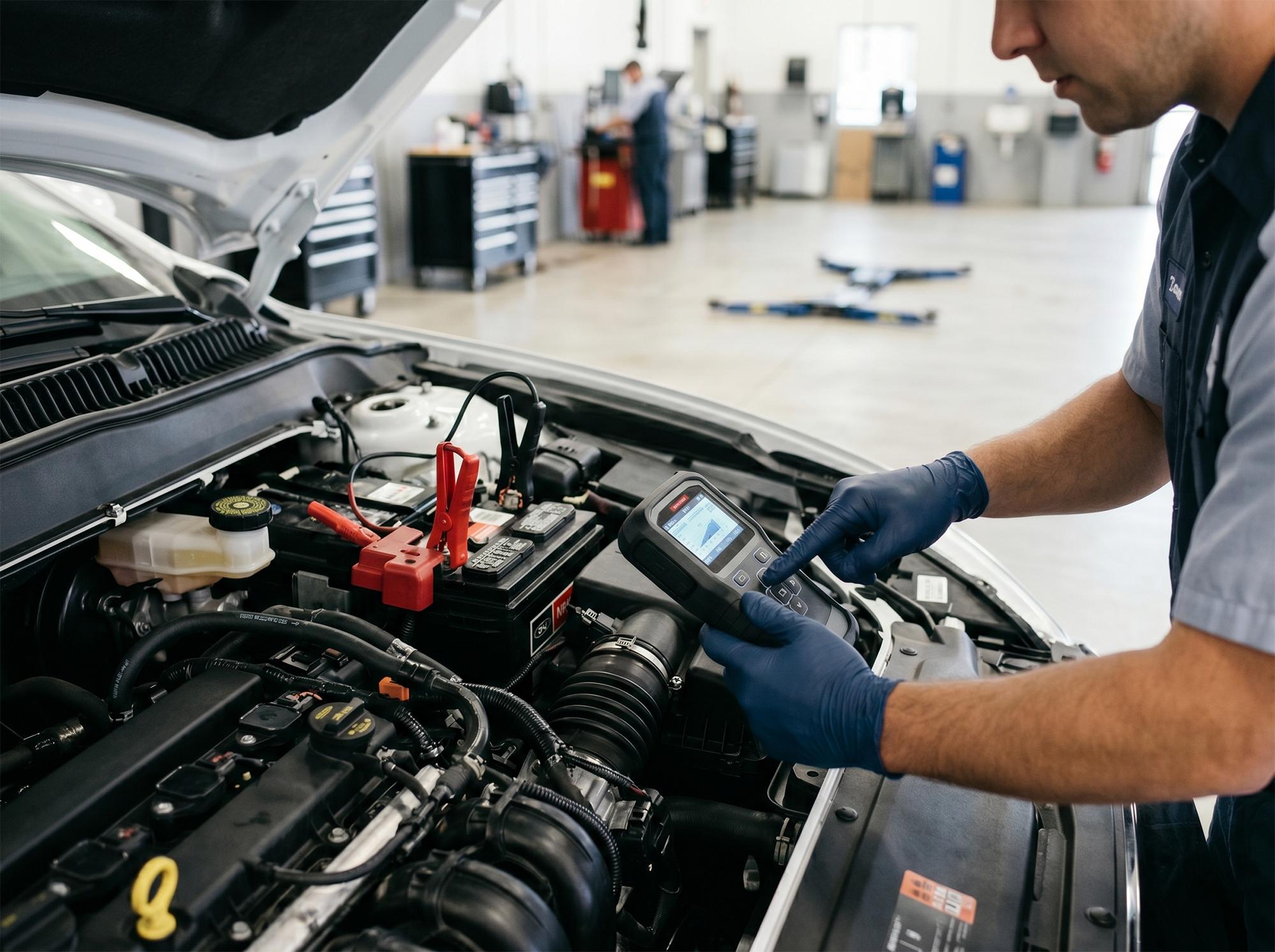
Several warning signs overlap with starter, alternator, wiring and electrical-drain faults. A battery test should be considered alongside terminal inspection and charging-system checks. If the engine cranks normally but does not start, the cause may involve fuel, ignition, engine management or the immobiliser.
What to do when you notice warning signs
Note the exact symptom and when it occurs.
Do not ignore repeated jump-starts or a warning light.
Arrange testing before buying a replacement battery.
Stop using or jump-starting a visibly damaged, swollen or leaking battery.
Related services in Melbourne West
If your vehicle is struggling to start, Car Battery Service can discuss battery testing, battery replacement or jump-start assistance, subject to location, vehicle and service availability. Explore our battery testing service, car battery replacement service, and jump-start assistance. You can also request a service to confirm availability.
Frequently asked questions
What is the most common sign of a weak car battery?
Slow engine cranking is a common clue, but it can also be caused by poor connections or a starter problem. Testing is needed to confirm the cause.
Can a car battery fail without warning?
Yes. Some batteries fail suddenly, so warning signs are not guaranteed. Periodic testing can be useful as a battery ages.
Why does my battery keep going flat?
Possible causes include an ageing battery, charging-system fault, electrical drain, or repeated short trips. Test the battery and vehicle systems to identify the reason.
Does a battery warning light mean I need a new battery?
Not necessarily. The warning may indicate a charging-system problem. Follow the vehicle manual and arrange checks rather than assuming the battery itself has failed.
Should I jump-start a swollen or leaking battery?
No. Do not jump-start or handle a damaged, swollen or leaking battery. Keep clear and seek professional assistance.
When should I test my car battery?
Test it if starting becomes slow, it repeatedly goes flat, jump-starts become frequent, or the battery is ageing. Test promptly if warning lights or other electrical symptoms appear.
Need car battery assistance?
Call +61 467 037 886 or email mechanicnearyoubatteries@gmail.com to enquire about your vehicle and service availability.
Symptoms are general indicators, not a definitive diagnosis. Follow your vehicle manufacturer’s instructions and seek qualified assistance where necessary.